

The History of Hysteria and Modernism
Historically diagnosed (mostly in women) as a disorder involving excess emotion or nervous dysfunction.
Popularised by physicians like Jean-Martin Charcot and Sigmund Freud in the late 19th century.
Freud’s early psychoanalytic work on hysterical conversion, such as Studies on Hysteria (1895), laid the foundation for understanding the unconscious mind (1).
Hysteria was historically diagnosed—primarily in women—as a condition marked by emotional excess and nervous instability. In the late 19th century, it gained prominence through the work of neurologist Jean-Martin Charcot, who used hypnosis to study it.
Sigmund Freud, influenced by Charcot, developed the theory of hysterical conversion, where psychological conflict is expressed as physical symptoms. Freud’s 1895 work, Studies on Hysteria, co-authored with Josef Breuer, was foundational in the development of psychoanalysis. This marked a shift from viewing hysteria as a physical illness to understanding it as rooted in the unconscious mind.
Modernism’s Obsession with the Inner Psyche
Modernist writers and artists were fascinated by the fragmented self, repression, dreams, and trauma, central themes in the concept of hysteria.
Modernist works often mirror the non-linear, disjointed nature of hysterical expression. For example, Virginia Woolf, who experienced mental illness, used stream-of-consciousness to explore psychological depth in Mrs Dalloway and The Waves.
Modernist writers and artists explored themes of the fragmented self, repression, and trauma, mirroring the psychological complexity of hysteria. Their works often adopted non-linear narratives and disjointed styles, reflecting the inner turmoil of the mind.
Virginia Woolf, who herself struggled with mental illness, portrayed deep psychological insight using stream-of-consciousness in Mrs Dalloway (1925) and The Waves (1931). T.S. Eliot’s The Waste Land (1922) also exemplifies fragmentation and emotional dislocation. These works illustrate how hysteria influenced the aesthetics and themes of modernist literature (2).
Visual Art and the Hysterical Body
Artists like Egon Schiele, Edvard Munch, and Salvador Dalí depicted distorted bodies and emotional extremes, echoing the aesthetics of hysteria.
Modernism blurred the line between madness and genius, especially in representations of women’s bodies and suffering (3).
Modernist artists like Egon Schiele and Edvard Munch portrayed raw emotion and psychological anguish through distorted, contorted human forms, reflecting the visual language of hysteria. Munch’s The Scream (1893) captures existential dread and inner chaos, while Schiele’s figures convey vulnerability and psychic tension.
Salvador Dalí, influenced by Freud, explored dream states and unconscious fears in surrealist works like The Persistence of Memory (1931). These artworks challenged traditional notions of beauty and sanity in their depictions of women’s suffering. Modernism thus merged hysteria’s aesthetics with a celebration of emotional and mental intensity (4).
Feminist and Cultural Critiques
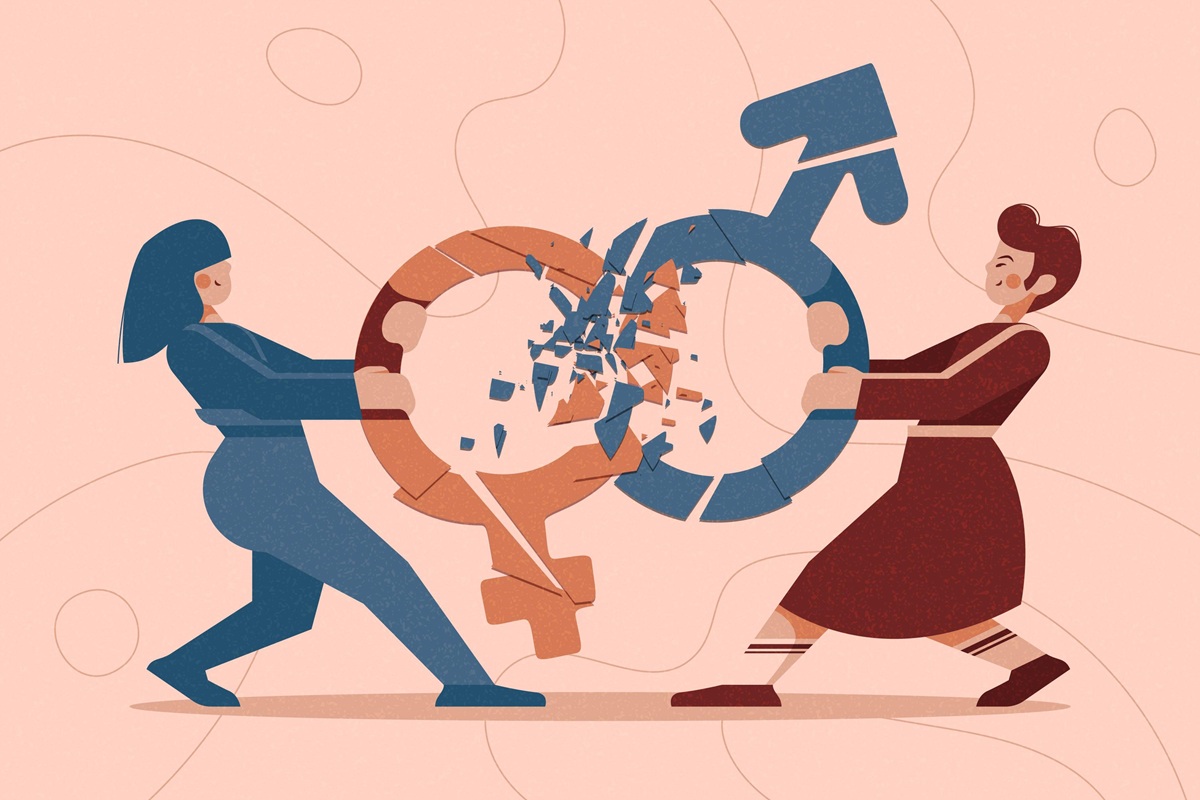
Hysteria is now seen as a gendered diagnosis, often used to control or pathologise women’s emotional and sexual expression.
Modernist women writers such as Djuna Barnes, H.D., and Katherine Mansfield challenged this through characters who reclaimed hysteria as a form of resistance or deeper awareness.
Hysteria has come to be recognised as a gendered diagnosis historically used to suppress women's emotional and sexual autonomy. Modernist women writers, such as Djuna Barnes, in Nightwood (1936), portrayed characters grappling with identity and madness as a critique of patriarchal norms. H.D. (Hilda Doolittle) explored trauma and inner life in "Tribute to Freud," reclaiming psychological depth as an artistic insight.
Katherine Mansfield depicted emotionally complex female characters, resisting simplified notions of female fragility. These writers reframed hysteria as a space of resistance, introspection, and creative power (5).
Reframing Historical Diagnoses through Gender-Sensitive Mental Health Care
- Public health systems are increasingly acknowledging the historical misuse of diagnoses like hysteria.
- Future care models aim to integrate gender-sensitive and trauma-informed approaches to mental health, especially for women and marginalised groups.
- Training clinicians to understand cultural and historical biases can prevent the re-pathologisation of emotional expression.
Author: Tayyeba Idrees Butt, M.D.
Edited by: Damilola Elewa
Additional Read;


Comments (0)